
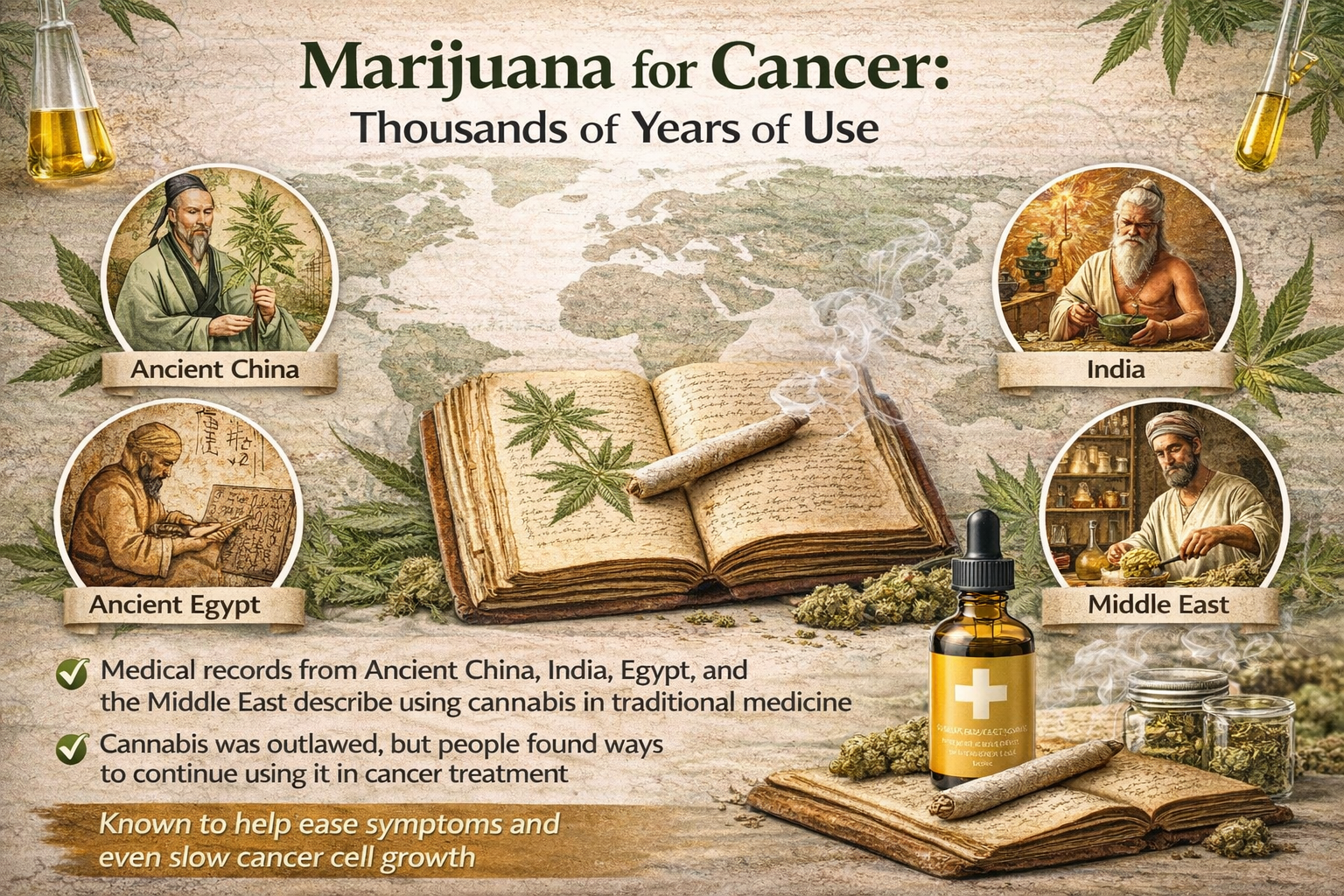
Cannabis has been used as a healing plant for thousands of years, and throughout history it has been valued in many cultures for its therapeutic properties. Ancient medical texts from regions such as China, India, Egypt, and the Middle East describe the plant’s use for pain relief, inflammation, and a variety of chronic illnesses. While historical records do not describe cancer the way modern medicine defines it today, they do reference tumors, growths, and persistent inflammatory conditions that were often treated with plant-based remedies—including cannabis.
A Long History of Medicinal Use
In traditional Chinese medicine, cannabis was documented as early as 2700 BCE for its analgesic and anti-inflammatory effects. In Ayurvedic medicine in India, cannabis was used to address pain, appetite loss, and wasting conditions. Across different civilizations, healers relied on botanical medicine because it was often the only therapeutic option available.
As modern medicine evolved in the 19th and early 20th centuries, cannabis extracts were commonly found in Western pharmacopeias and prescribed for pain, nausea, and muscle spasms. However, shifting legal and political landscapes in the 20th century led to prohibition in many countries, which dramatically limited research and access.
Continued Use Despite Prohibition
Even after cannabis was outlawed in various parts of the world, many patients continued to seek it out—particularly those dealing with serious illnesses such as cancer. Word-of-mouth reports and personal experiences kept interest alive during decades when formal research was restricted.
In recent years, as laws have changed and research barriers have eased, scientific studies have begun exploring what many patients long believed: cannabis may offer meaningful therapeutic benefits in oncology care.
Symptom Management and Quality of Life
Today, one of the most well-established uses of medical cannabis in cancer care is symptom management. Research supports its role in helping to:
- Reduce chemotherapy-induced nausea and vomiting
- Stimulate appetite in patients experiencing weight loss
- Ease chronic and neuropathic pain
- Improve sleep
- Reduce anxiety associated with diagnosis and treatment
In fact, synthetic cannabinoid medications have been approved in several countries specifically for chemotherapy-related nausea. Many patients also report improved overall comfort and quality of life when cannabis is incorporated into their care under medical supervision.
Emerging Research on Tumor Biology
Beyond symptom relief, laboratory and preclinical studies have examined cannabinoids—such as THC and CBD—for their potential effects on cancer cells. In cell cultures and animal models, researchers have observed that cannabinoids may:
- Influence cancer cell growth
- Promote programmed cell death (apoptosis) in certain tumor cells
- Affect tumor angiogenesis (the formation of new blood vessels that feed tumors)
- Impact metastasis pathways in experimental settings
A Growing Area of Scientific Interest
As more countries and U.S. states expand medical cannabis programs, research into cannabinoids and cancer continues to grow. Major universities and medical centers are now actively studying how cannabis compounds interact with the body’s endocannabinoid system and how that interaction may influence inflammation, immune response, and tumor behavior.
For many patients, cannabis serves as a complementary therapy—helping manage symptoms and improve well-being alongside traditional oncology care. Its long global history of medicinal use, combined with modern scientific investigation, has reignited serious interest in its therapeutic potential.
A Balanced Perspective
Cannabis has undeniably played a role in medicine across cultures and centuries. Today, it is increasingly recognized for its ability to support symptom management in cancer care. As research continues, the global medical community moves closer to fully understanding the plant’s capabilities—and its place in modern cancer treatment strategies.